
About the Alfalfa County Clerk
The Alfalfa County Clerk is an elected county officer. Laneta Schwerdtfeger holds the post today. The official county page lists her as a Republican. Her hometown is Helena. She has served since July 2012. Roberta Jamison is the First Deputy. Lacey Elliott is the Deputy. The office sits in the courthouse in Cherokee, the county seat. Most land filings in the county start at this counter.
This office is the land-records hub for Alfalfa County. The clerk serves as registrar of deeds and custodian of records. She is also secretary to the county boards. In that role she posts agendas and records board proceedings. The office reviews claims, prepares warrants for payment, and keeps the county financial ledger. It maintains a judgment docket too. That docket logs district-court orders that touch real property. Open-record copy fees are set and posted here as well.
Alfalfa County Clerk
County Clerk: Laneta Schwerdtfeger
300 S. Grand Ave, Suite 5
Cherokee, OK 73728
580-596-3158
Fax: 580-596-3157
countyclerk@alfalfa.okcounties.org
Hours: 8:30 a.m. to 4:30 p.m. (open at noon)
The county's own County Clerk page spells out these duties and posts the office contacts.
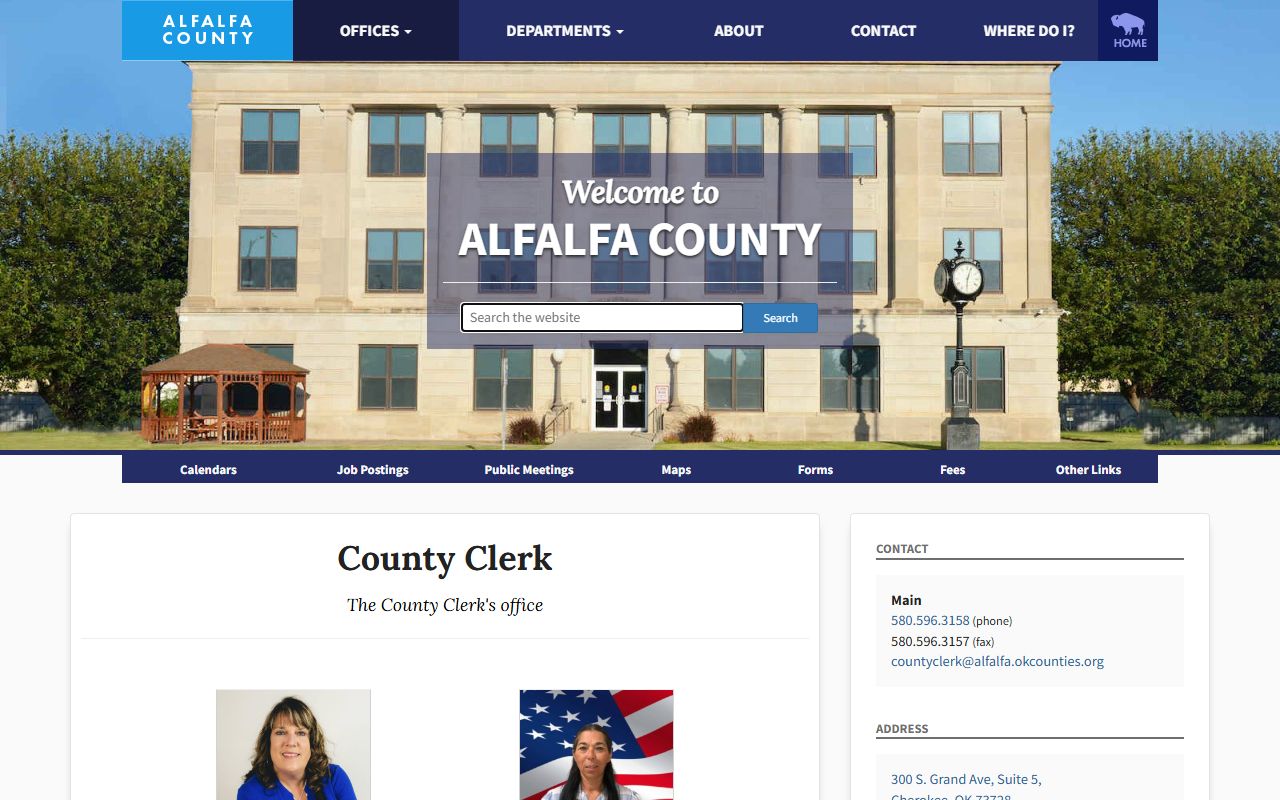
That page is the official source for the clerk's address, phone, and recording role, so it makes a good first stop before any visit to Suite 5.
County Clerk vs Court Clerk in Alfalfa County
Two offices in the Alfalfa County courthouse carry near-twin names. They do not hold the same records. The County Clerk keeps land and county-board records. The Court Clerk keeps court case files. People often call the wrong office first. A quick rule sorts it out. If the record involves a deed, a mortgage, a recorded lien, or a county board, the County Clerk has it. If it involves a lawsuit, a criminal charge, a divorce decree, or a marriage license, the Court Clerk has it.
One overlap trips people up. When an Alfalfa County District Court order affects real property, the County Clerk enters it on the judgment docket and may record a copy. The case file itself stays with the Court Clerk. So a probate or a divorce that moves land can leave a trail in both offices. For court case files, certified case copies, and marriage licenses, the separate Alfalfa County Court Clerk page covers the request process in full.
Note: A recorded copy in the land records is not a substitute for the official court file, so confirm the case detail with the Court Clerk when a court order is the issue.
Land and Deed Records in Alfalfa County
Land records are the core of the County Clerk's work. The office records and indexes documents that create, transfer, or encumber real property in Alfalfa County. A deed moves title from one owner to the next. A mortgage pledges the land as security for a loan. A release clears a paid-off loan from the record. Each document gets a book and page or an instrument number when it is recorded. That number is how the office and the public find it again.
The clerk's index lets a searcher build a chain of title. A chain of title is the ordered history of every transfer for one parcel. Title companies, lenders, and buyers walk that chain before a sale closes. The record also shows liens against a property. Those can include mortgages, mechanic's liens, tax warrants, and recorded judgments. A clear search shows what is owed and who must sign to clear it.
Alfalfa County's recorded land history runs deep. The county was formed at statehood in 1907 from Woods County, and recorded series reach back to the early settlement years. The digital index and images start in June 1964, with year series indexed back to 1901 in places. Older paper volumes are held at the courthouse for in-person review.
The Alfalfa County Judgment Docket
The judgment docket is a special part of the land record. The County Clerk keeps it. It lists money judgments and district-court orders that attach to real property in the county. When a court enters a judgment, the winning party can have it docketed here. Once docketed, the judgment becomes a lien on the loser's land in Alfalfa County. That lien can block a clean sale until it is paid or released.
This is the bridge between the courthouse's two clerks. A divorce, a probate, or a civil suit may order land to change hands or may award a debt. The Court Clerk holds the case file. The County Clerk records the order or the judgment so it shows up in a title search. A buyer or lender who skips the judgment docket can miss a lien that survives the closing.
How to Search Alfalfa County Land Records
Most Alfalfa County land records are searchable online before you ever call the clerk. The County Clerk publishes the index and images through the OKCountyRecords portal. The basic search starts with a name. The advanced search adds book, page, instrument type, legal description, and date filters. The steps below walk through a typical land-record search.
- Open the OKCountyRecords Alfalfa County portal and start with the name search. Enter a person as Last, First, or type a business name.
- Set the Party Type if you know it. Choose Grantors, Grantees, Issued Againsts, or Lienholders to narrow a common name, or leave it on All parties.
- Jump to the advanced search to add an instrument type, a recording date range, or a book and page if you have them.
- Use the legal-description fields for a parcel search. Enter the quarter, section, township, range, or the addition, block, and lot.
- Run the search, then open a result to view the index entry. Scanned images and certified copies may require a paid plan or a counter request.
Note: Plans for scanned land records start at $12 on the portal, and revenue from printed copies supports the county, so check the plan terms before you buy image access.
Alfalfa County Land Record Search Fields
The OKCountyRecords portal gives Alfalfa County a deep set of search fields. A name alone works for a quick look. The advanced fields let a title searcher pin down one instrument or one parcel. The table lists the fields the portal exposes for an Alfalfa County land search.
| Field | What It Does |
|---|---|
| Name | Last, First order for a person, or the full business name |
| Party Type | All parties, Grantees, Grantors, Issued Againsts, or Lienholders |
| Book | Recording book number for the volume that holds the document |
| Page | Page number within the recording book |
| Series / Year | Year dropdown reaching back to 1901, with some gaps |
| Instrument Number | The unique number assigned when the document was recorded |
| Instrument Type | Deed, Mortgage, Assignment, Judgment, Divorce, Tax Warrant, Will, and more |
| Recorded Start / Recording End | Date range that limits results to a recording window |
| Legal Description | Quarter, Section, Township, Range, Addition, Block, Lot |
Recorded Instrument Types in Alfalfa County
The land record holds far more than plain deeds. The County Clerk records a wide range of instruments that affect title or give public notice. The instrument-type filter on the portal mirrors that range. Knowing the right type speeds a search and tells you what the document does.
- Deeds, including warranty deeds, sheriff's deeds, and personal-representative deeds
- Mortgages, assignments, and releases tied to property loans
- Judgments and recorded district-court orders affecting real property
- Oil and gas leases, common in this farming and energy county
- Tax warrants and their releases from state and federal agencies
- Probate instruments such as letters testamentary, letters of administration, and wills
- Guardianship orders, divorce decrees, and proofs of death that touch title
Probate and family-court orders show up here because they can move land. A guardianship order or a will can change who holds title. When that happens, the order is recorded so the chain of title stays whole.
Recording Rules for Alfalfa County Land Records
A document must meet format rules before the County Clerk can record it. These conforming-instrument rules cover page size, margins, and the layout of the first page. The rules keep the records readable and let the office stamp the book, page, and date without covering text. A deed that breaks the margin rules can be rejected or charged a higher fee.
The county posts its requirements so filers can prepare a clean document. The standards cover top-margin space for the recording stamp, legible print, and the basic facts each instrument must carry. Following them on the front end avoids a return trip to the courthouse.
The county's Conforming Instruments page lays out the recording margins and format rules in detail.
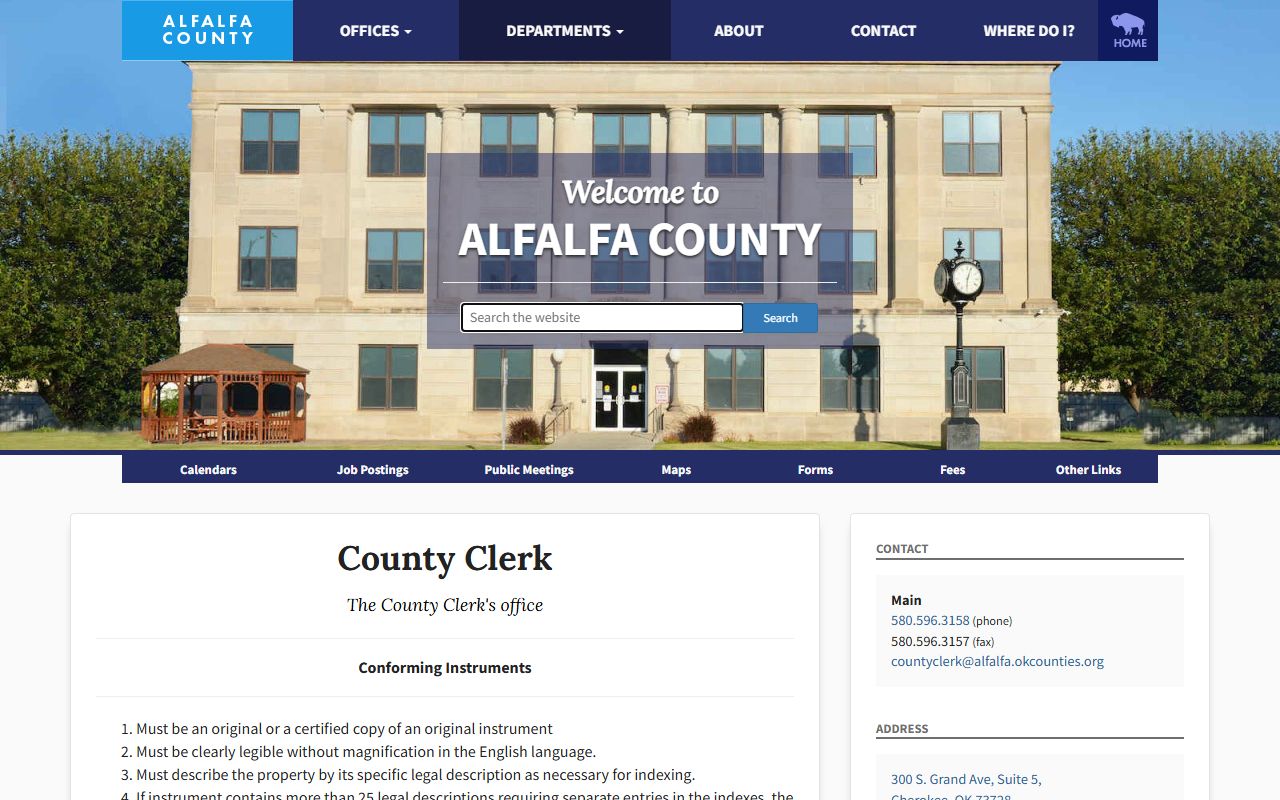
That page is worth a read before drafting or mailing a deed, since a conforming document records faster and avoids the extra non-standard charge.
Board and Warrant Duties of the County Clerk
Land records are only part of the job. The County Clerk also runs the paperwork for county government. She serves as secretary to the county boards. That work keeps the public meeting record straight and the county's money trail clear. These duties sit beside the recording counter, not apart from it.
- Posts agendas for the Board of County Commissioners and other boards
- Records the minutes and proceedings of board meetings
- Reviews claims submitted against the county
- Prepares warrants for payment of approved claims
- Keeps the county financial ledger and budget records
For a court user, the meeting and budget records matter less than the deeds. They still show why the office is the county's record keeper. The same office that records your deed also files the public's meeting notices and the county's payments.
Requesting Copies From the Alfalfa County Clerk
Anyone can get a copy of a recorded document. A plain copy works for personal reference. A certified copy carries the clerk's certificate and stands as proof of the record. Lenders, courts, and title companies often ask for the certified version. The steps below cover a typical copy request at Suite 5.
- Find the document first. Search the OKCountyRecords portal by name or legal description, then note the book and page or the instrument number.
- Decide whether you need a plain copy or a certified copy with the clerk's certificate.
- Contact the County Clerk to confirm the page count, the copy fee, and how the office takes payment.
- Request the copy at the counter, by mail, or by phone with the recording details in hand.
- Pay the per-page copy fee, plus the certificate fee if you need certification.
Note: A certified copy adds the certificate charge on top of the per-page copy fee, so ask for the full total before mailing payment to Suite 5.
Alfalfa County Clerk Fee Schedule
The County Clerk's fees are published on the county website. Recording fees, copy fees, lien fees, and the documentary stamp tax all appear there. The documentary stamp tax is based on the sale price of the property. The recording fee depends on the page count. The table lists the posted fees for the most common filings and requests.
| Item | Fee |
|---|---|
| Documentary stamp tax | $0.75 per $500 of consideration |
| Additional preservation fee | $10 each document |
| Real estate, first page | $8 |
| Real estate, each additional page | $2 |
| Power of attorney | $8 |
| Certified copy certificate | $1 |
| Copy fee | $1 per page |
| Fictitious name partnership | $8 |
| Medical license filing | $8 |
| Mechanic / materialmen lien | $10 plus $2 each additional page |
| Name change | $8 |
| Plat, 1 block or less | $10 |
| Plat, 2 blocks or more | $25 |
| UCC lien search | $5 |
| UCC phone search | $3 |
| Federal tax lien | $8 |
| Release of federal tax lien | $8 |
| Judgments, small claims, JEJs, deficiency | $8 plus $2 each additional page |
| Oklahoma tax warrant | $8 |
| Release of Oklahoma tax warrant | $8 |
The county's official fee page is the source for these amounts and lists the assessor and treasurer charges as well.
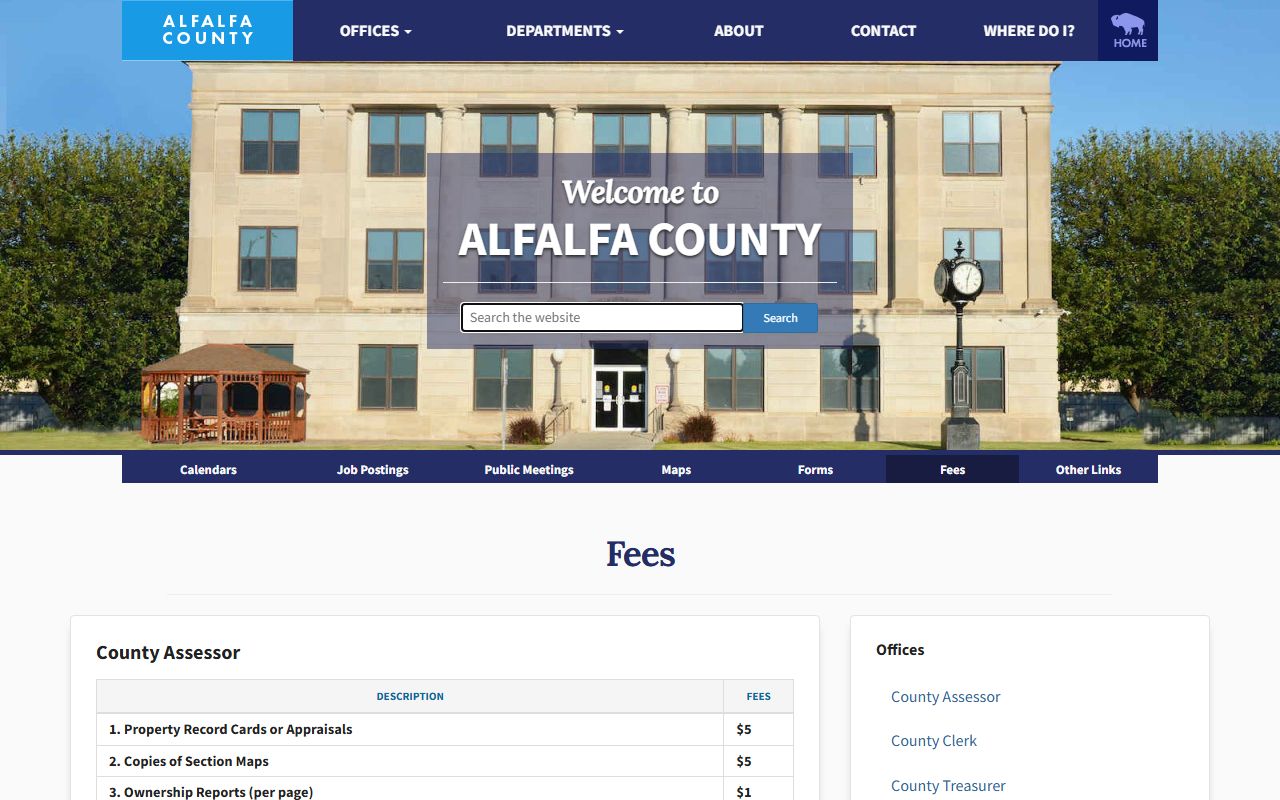
Check that page before mailing a document or a copy request, since fees can change and the page count drives the final total.