
Criminal Court Records in Alfalfa County
A criminal court record is the case file a court opens once a prosecutor files charges. In Alfalfa County, the District Court holds these files, and the Court Clerk keeps them. The file starts on the day charges are filed. It grows as the case moves. Every plea, motion, hearing, and order lands inside it. By the end, the record shows the charges, the disposition, and the sentence. The Court Clerk in Cherokee is the official keeper of that record, and the paper file controls when the online docket falls short.
Charges in Alfalfa County come from the District Attorney, whose office is profiled on the Alfalfa County District Attorney page.
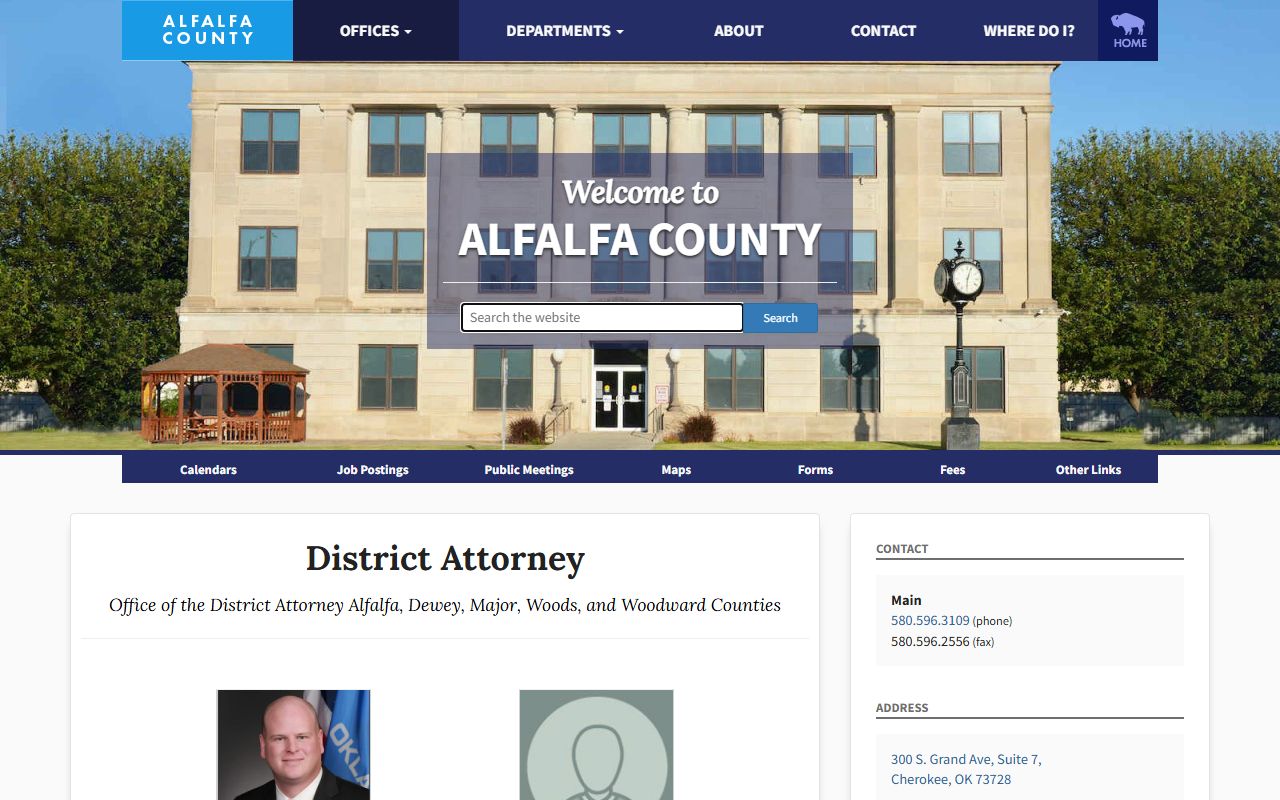
District Attorney Christopher Boring prosecutes felonies and misdemeanors across a five-county district that takes in Alfalfa, and each filed case opens a new criminal court record. Two court levels produce these records here. The District Court is the court of general jurisdiction. It hears felony and misdemeanor cases, from low-level charges to the most serious. Cherokee's Municipal Court handles city ordinance and municipal traffic matters on a separate track. Those city cases may not appear in the county court search at all. For the full range of court files, the county's court records cover civil, family, and probate cases too.
How to Search Alfalfa County Criminal Court Records
Most Alfalfa County criminal cases are searched online through ODCR. The county links to ODCR for court records from its own site. The search is free to view. ODCR lists Alfalfa as a court option and lets you filter by case type. OSCN is the second route. It offers a case-number lookup and daily docket reports for the District Court.
A name or a case number is enough to start. Old, sealed, or paper-only cases may not show.
- Open ODCR and choose Oklahoma District Courts, then select Alfalfa under Court.
- Enter a defendant name as last name, comma, first name, or type a full case number.
- Filter Type of case to a criminal category such as Felony, Misdemeanor, Probable Cause, Search Warrants, or Drug Court.
- Open the case to read the docket, the charges, and the disposition.
- Request a certified copy from the Court Clerk in Suite 8 when an official document is needed.
The ODCR criminal search runs on a handful of fields. The OSCN docket portal mirrors many of them and adds a case-number lookup for the Alfalfa County District Court.
| Field Label | Type | Required | Notes / Format |
|---|---|---|---|
| Court | Dropdown | No | Select Alfalfa |
| Party name | Text | No | Last, First |
| Party type | Dropdown | No | Plaintiffs & Defendants or All Parties |
| Type of case | Dropdown | No | Felony, Misdemeanor, Probable Cause, Search Warrants, Drug Court |
| Full case number | Compound | No | Prefix-year-number; CF, CM, TR, SW |
| Filed date range | Date | No | Narrow common names or older cases |
A statewide criminal history comes from a different source, the OSBI CHIRP portal.
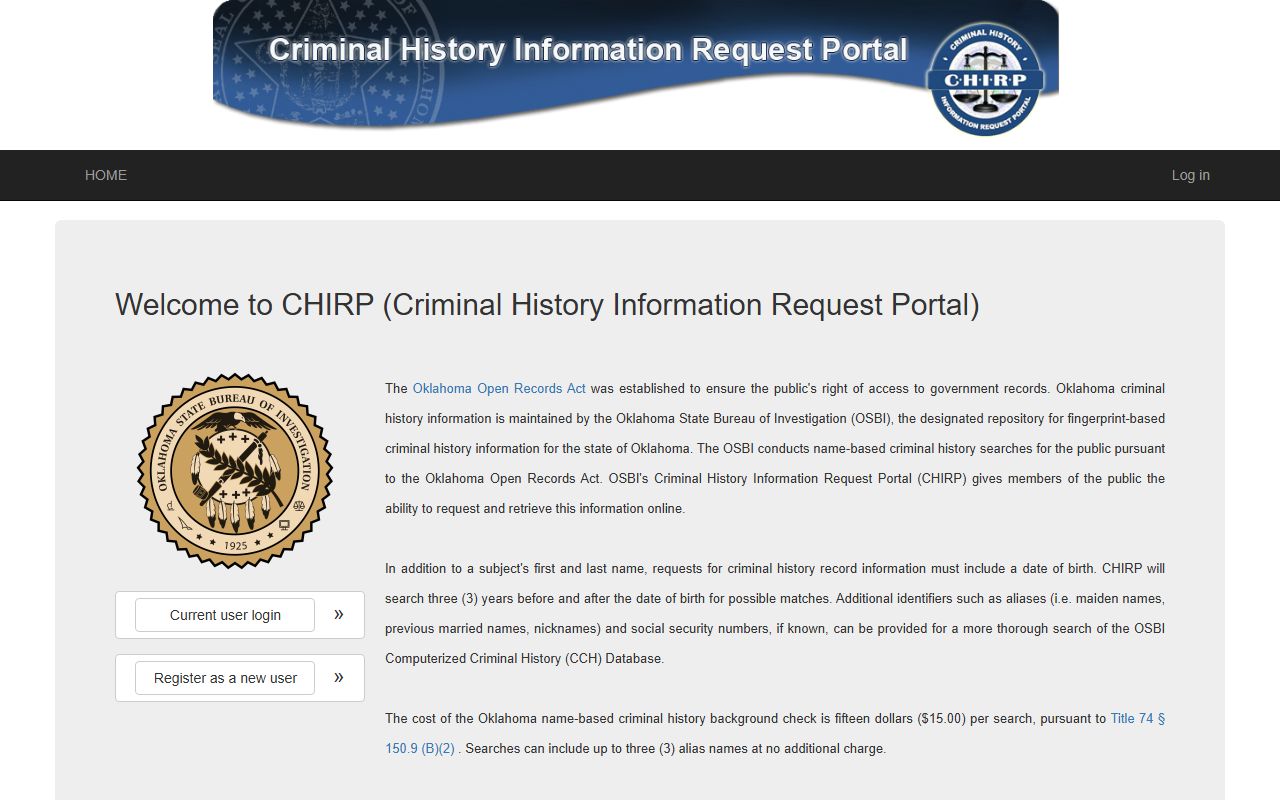
CHIRP returns name-based criminal history from across Oklahoma. It requires a date of birth and a free account, and it charges a fee per search. That reach goes well beyond a single Alfalfa County case file. ODCR and OSCN cover the court docket. CHIRP covers statewide history. When a document will not download, the Court Clerk can pull the paper file.
Stages of an Alfalfa County Criminal Case
A criminal case moves through set stages. Each one leaves a mark in the record. The local prosecutor's overview lays out the path from investigation to sentencing.
The office's criminal case overview walks through how a case begins and ends.
It explains that police investigate, a prosecutor decides whether to charge, and the case formally opens when a complaint is filed or an officer files a citation. From there the file follows a clear order.
Case flow: Charges Filed › Arraignment › Pretrial / Motions › Plea or Trial › Disposition › Sentencing
| Stage | What Happens |
|---|---|
| Charges Filed | The prosecutor files a complaint or information, and the case opens with a CF or CM number. |
| Arraignment | The first appearance, where the defendant hears the charges and enters an initial plea. |
| Pretrial / Motions | Bond is set, discovery is exchanged, and motions, hearings, and any preliminary hearing are logged. |
| Plea or Trial | The case ends in a plea or goes to trial before a judge or jury. |
| Sentencing | After a conviction, the court sets jail or prison time, probation, fines, costs, or restitution. |
Each stage adds entries to the docket. The record reads in order, top to bottom. Note: Arraignment is the first court appearance after an arrest or citation, where the defendant hears the charges and enters an initial plea.
What Alfalfa County Criminal Court Records Show
A criminal court record is built from many fields. Together they tell the whole story of the case. The main fields show up across the docket and the documents tied to it.
| Field | What It Shows |
|---|---|
| Case Number | Prefix-year-number; CF marks a felony, CM a misdemeanor, TR a traffic case. |
| Court / County | Alfalfa County District Court, or the Cherokee Municipal Court for ordinance matters. |
| Parties | The State of Oklahoma as plaintiff and the named defendant. |
| Charges | Each count as filed, with the statute cited and the severity level. |
| Plea | The defendant's response: guilty, not guilty, or no contest. |
| Docket Events | Filings, bond, motions, hearings, orders, and journal entries in date order. |
| Disposition | The final outcome of each charge. |
| Sentence | Jail or prison term, probation, fines, court costs, and restitution. |
Documents attach to many of these fields. The file may hold the complaint or information, the citation, bond paperwork, motions, orders, journal entries, and the judgment. Some show online. Some stay at the counter. For a closer look at the charges themselves and how they get filed, the county's arrest records and court charges page breaks down the charging document.
Charges vs. Convictions in Alfalfa County
Being charged is not the same as being convicted. A charge is an accusation. A conviction is a finding of guilt. A criminal court record can show charges that were dropped, dismissed, reduced, or ended in acquittal. Reading the disposition for each count is what tells you the real result.
The District Attorney decides what to file, a role spelled out on the DA duties page.
The office prosecutes crimes in the district and can amend or reduce a charge as the case develops. That is why the filed charge and the final conviction are not always the same record entry.
| Charge | Conviction | |
|---|---|---|
| Stage | Accusation | Verdict or plea |
| Burden of Proof | Probable cause | Beyond a reasonable doubt |
| Decided By | Prosecutor files it | Judge or jury |
| Can Change | Amended, reduced, dropped | Stands unless appealed or vacated |
| Public Record | Yes | Yes |
Always check the outcome, not just the charge.
Reading Dispositions and Sentences
The disposition is the outcome of a charge. The sentence is the punishment that follows a conviction. Both sit near the end of the docket. Common dispositions read like this:
- Guilty: a plea or verdict of guilt that leads to sentencing.
- Not guilty: an acquittal, where the charge does not become a conviction.
- Nolo contendere: a no-contest plea the court accepts.
- Dismissed: the charge is dropped before a verdict.
- Deferred: judgment is delayed while the defendant meets set conditions.
Sentences vary. A judge may order jail or prison time, probation, fines, court costs, or restitution to victims. Restitution repays a victim's losses. The DA's victim programs help track those payments.
Victim support and restitution run through the office's victim services page.
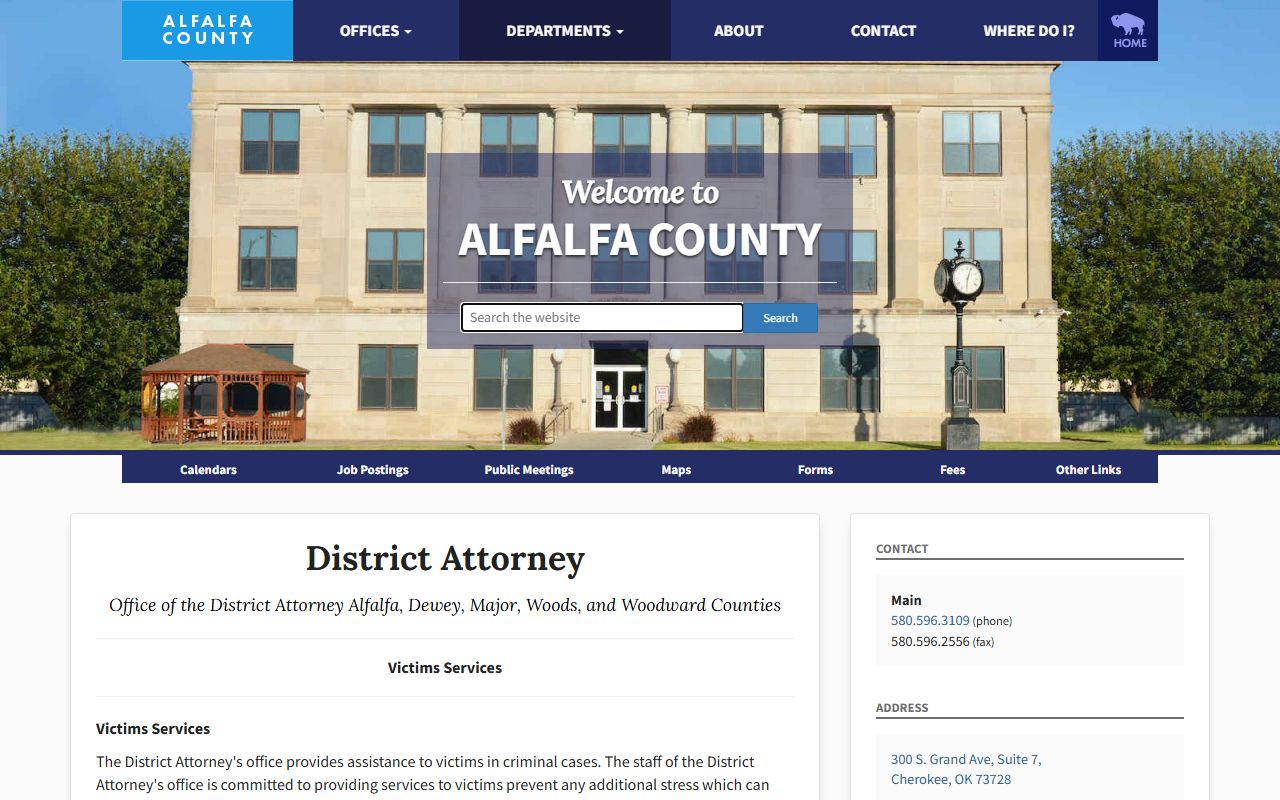
That office helps victims track case status and restitution, and Oklahoma VINE adds custody and case notifications. A sentence in the record connects to real follow-up. Note: A deferred sentence delays a final judgment while the defendant meets set conditions, and a clean completion can keep the case from becoming a formal conviction.
Sealed vs. Expunged Criminal Records
Some criminal records get closed off. Oklahoma uses two ideas that often blur together. A sealed record is hidden from public view. An expunged record is treated as if it never existed. In Oklahoma, expungement is carried out by sealing the file under statute.
| Sealed | Expunged | |
|---|---|---|
| Visibility | Hidden from public inspection | Treated as if it never happened |
| Law Enforcement | Limited access by order | Very limited access |
| Cost | Court-record sealing is free | Arrest-record clearing adds a $150 OSBI fee |
| Authority | 22 O.S. § 19 procedure | 22 O.S. § 18 eligibility |
The process starts in the District Court where the case sits. A petition goes to the court under 22 O.S. § 18 for eligibility and 22 O.S. § 19 for procedure. Sealing the court record is free. Clearing the arrest record through OSBI adds a $150 processing fee, paid by cashier's check or money order. OSBI guidance on criminal-history expungement explains that fee split. After a signed order, the named agencies seal their copies.
Public Access to Alfalfa County Criminal Records
Oklahoma treats court records as public by default. The Open Records Act opens government records unless an exception applies. Criminal case files fall under that rule. Anyone can search Alfalfa County criminal court records online or at the courthouse. The official clerk record always controls.
Online coverage has limits. Older files may sit only on paper at the Court Clerk's counter.
Key Statutes:
Oklahoma Open Records Act, Title 51 O.S. § 24A - opens government records to the public unless a specific exception applies.
Court of Criminal Appeals Rule 2.6 - the online court search is a convenience and does not replace the clerk's case-management system.
Background Checks and Criminal Records
A casual name search is not a background check. A formal background check follows the federal Fair Credit Reporting Act. Employers, landlords, and lenders must use an FCRA-compliant source. OSBI CHIRP and licensed screening firms serve that need. A free docket search does not.
Important: This site is not a consumer reporting agency under the FCRA, and its information may not be used for credit, employment, tenant, or insurance decisions.
Restricted Alfalfa County Criminal Court Records
Not every criminal record is open. Some are closed by law. Others are hidden by court order. These categories stay out of the public search:
- Juvenile cases, confidential under 10A O.S. § 2-6-102.
- Sealed or expunged cases removed from public view by court order.
- Mental-health and involuntary-treatment matters, generally closed.
- Adoption files, confidential by statute.
- Sealed grand-jury matters that are not posted online.
Personal identifiers also get redacted. Dockets may hide Social Security numbers, financial accounts, birth dates, and minor names. For an active warrant tied to a case, the sheriff and the court hold the current status. When a file is sealed or missing online, the Court Clerk can confirm what is releasable. Note: Juvenile criminal records in Alfalfa County are confidential under state law, so access usually requires party status, an attorney, or a court order.